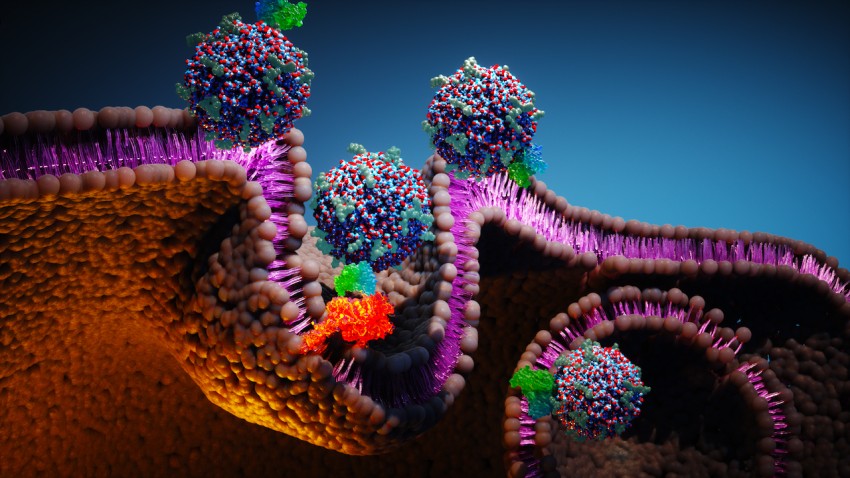
News

Conversational AI tools denied blunt requests for harmful content by researchers posing as intimate partner abusers, but these guardrails were easily circumvented, a new Cornell Tech study has found.

As states reassess Medicaid coverage following recent federal policy changes and the end of pandemic-era protections, researchers are advocating for evidence-based health care policy reform and expanded Medicaid coverage for children.
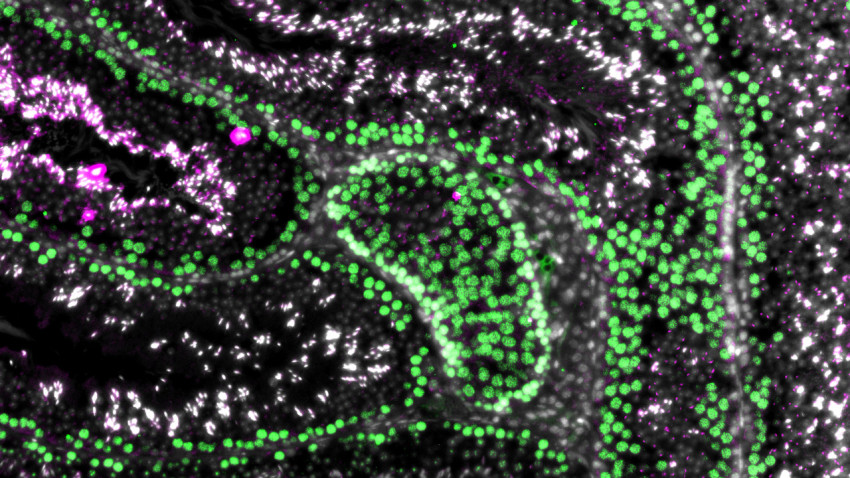
A proof of principle study in mice, six years in the making, shows how targeting a natural checkpoint in meiosis, the process by which sex cells reproduce, safely stopped sperm production.

A circulating tumor cell called a dual-positive cell is associated with shorter survival time in patients with advanced breast cancer.

A machine-learning model developed by Weill Cornell Medicine investigators may provide clinicians with an early warning of a complication that can occur late in pregnancy.

EdemaFlex, a new glove with more than three dozen actuators across all five fingers and the palm, developed by Cornell researchers, aims to reduce swelling for people suffering from edema.

The study from an international team of experts in veterinary medicine, human medicine and genomics provides the first large-scale genetic map of feline cancer.

Researchers found that higher recent dietary choline intake was associated with lower levels of inflammation in the third trimester.

The approach shows early promise over current commercial methods for identifying more patients likely to benefit from PARP inhibitor cancer treatments.
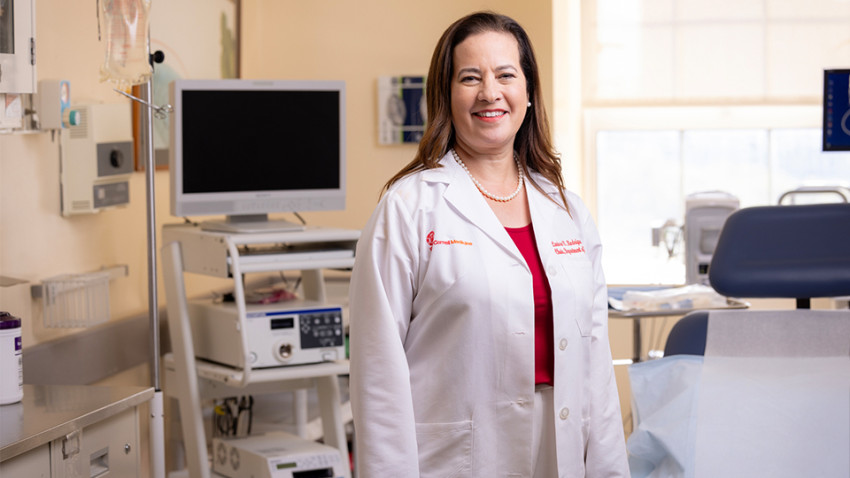
Though pelvic floor disorders happen when the muscles and tissues that support the bladder, bowel and uterus weaken or don’t work properly, and affect one-third of all women, they are not a normal part of aging.

Gut microbes may play a key role in training a mother’s immune system to adapt to the developing fetus during pregnancy, according to a preclinical study by Weill Cornell Medicine investigators.